
Education
Danxj Planet
Short biology lessons explain animal adaptations, evolution, ecosystems, plants, marine life, and microbiology through direct, question-led topics. Recent uploads use compact explainers ranging from under a minute to several minutes, with recurring subjects such as penguins, cyanobacteria, plankton, and animal temperature control. It is a useful fit for curious learners and students seeking approachable introductions to life science. Viewers should use additional authoritative health sources when topics move into immunity, outbreaks, or disease.
Hidden GemEducation
Editorially reviewed:
Evergreen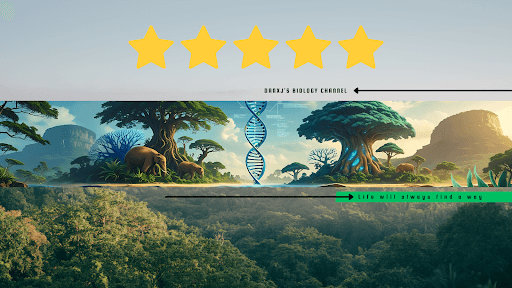

Viewer engagementModerate engagement
Based on 20 recent videos
Assessed 08 October 2026
Editorial focusEarth & Space Science Science & Technology
Editorial note
WorthWatch verdict
Best for
curious learners seeking quick biology refreshers
Strength
clear, question-led introductions to life science
Consider if
you need deeper detail or current guidance on health topics
Recent videos
Latest from the source
Deep Dive
Danxj Planet: Biology from Cells to Ecosystems
Main focus
Danxj Planet traces life science across scales, pairing cell-level concepts with the ecosystems that connect living things. It is built for students seeking clear biology support and curious viewers who want an approachable entry point into the subject.
Why it matters
Choosing a clear refresher before class or exploring a new topic at home, viewers get accessible routes into core biology ideas. The student-led perspective keeps the emphasis on understandable explanations rather than specialist depth.
Style
Short videos, community questions and easy-to-follow explanations give Danxj Planet a welcoming, conversational teaching rhythm. The scope moves from microscopic life to broader environmental systems, suiting quick study sessions and casual learning.
Consistency
The stated Wednesday upload rhythm gives followers a clear expectation. Across 28 videos, the subject range remains anchored in accessible biology, from cellular life to ecosystems.
- Cell biology
- Life science foundations
- Ecosystems and ecology
- Biology study support
- Scientific curiosity
Editorial note
Use it as an introductory guide, and compare advanced biological claims or detailed mechanisms with current textbooks, course materials, or authoritative scientific sources.
Related channels
Related active channels
 Top Pick
FocusEarth & Space Science Science & Technology
MinuteEarth
Science and story-led explainers guide viewers through questions about the planet and its systems. MinuteEarth presents a broad educational remit with...
 Top Pick
FocusEarth & Space Science Science & Technology
Astrum
Question-led astronomy explainers examine the scale of the Solar System, the bodies orbiting the Sun, and the significance of space exploration....
 Top Pick
FocusScience & Technology Earth & Space Science
Kurzgesagt – In a Nutshell
Kurzgesagt – In a Nutshell is a highly established educational animation channel focused on science and curiosity-driven explanations. Kurzgesagt – In...
 Top Pick
FocusStructured Lessons Earth & Space Science
CrashCourse
Courses in history, literature, science, and other core subjects are presented as free educational video series. CrashCourse emphasizes a course-based...