
Academic Learning
Joint Mathematics Meetings
Mathematics research talks, educational exchanges, and professional panels from the Joint Mathematics Meetings bring together a broad academic program in one place. The programming spans scholarly presentations alongside discussions for educators, students, collaborators, and mathematics professionals. It is best suited to viewers seeking university-level mathematical ideas, disciplinary perspectives, and insight into the wider mathematics community.
Hidden GemAcademic Learning
Editorially reviewed:
Quiet lately
This source has been less active recently, but remains included for its editorial value.
Quiet lately

Viewer engagementNot enough recent signal
Assessment pending
Editorial focusMathematics & Physics University Lectures
Recent videos
Latest from the source
Deep Dive
Joint Mathematics Meetings: Research Talks and Academic Exchange
Main focus
Joint Mathematics Meetings brings research presentations, educational exchanges, and professional panels into a single academic archive. Its programming connects mathematical ideas with the teaching, career, and community conversations surrounding the discipline.
Why it matters
Choosing a research talk or professional discussion to deepen a particular interest is easier when scholarly and community-facing sessions sit together. The range suits students, educators, and mathematically trained viewers seeking perspectives beyond a standard course sequence.
Style
Conference lectures and panel sessions set the tone, with speakers addressing research questions, educational practice, and professional life in mathematics. The format favors standalone presentations and disciplinary exchange over a guided, linear curriculum.
Consistency
Across 213 videos, the archive maintains a clear conference-centered identity while covering research, education, and professional discussion. It works best as a searchable collection of sessions rather than a sequential learning path.
- Mathematics research presentations
- University-level mathematical ideas
- Mathematics education
- Professional panels and career discussion
- Academic collaboration and community
- Student and educator perspectives
Editorial note
Many sessions may assume prior mathematical training, and conference formats can be less approachable for beginners than a structured introductory course.
Related channels
More in Mathematics & Physics and University Lectures
 Top Pick
FocusMathematics & Physics University Lectures
Oxford Mathematics
Public lectures, student teaching, and research films bring mathematical ideas to a broad audience through an academic lens. Oxford Mathematics...
 Top Pick
FocusMathematics & Physics
3Blue1Brown
Animated mathematical lessons unpack core ideas across mathematics, physics, and computer science. Visual explanation is the defining format, using...
 Top Pick
FocusMathematics & Physics Open Courseware
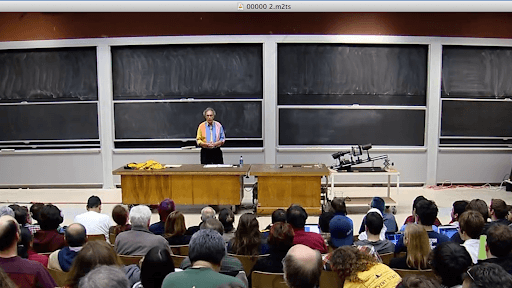
Lectures by Walter Lewin. They will make you ♥ Physics.
A substantial English-language physics lecture archive covering classical mechanics, electromagnetism, and vibrations and waves. The course-oriented...
 Top Pick
FocusMathematics & Physics Open Courseware
Professor Leonard
Course-specific mathematics instruction is organized into playlists designed to support sustained study rather than isolated problem tips. With more...