
Academic Learning
Mark Mattson
Statics and strength-of-materials lessons guide learners through practice tests, final-exam review, shear and moment diagrams, torsion, stress, deflection, and related engineering mechanics. The recent catalogue is organized like a course, pairing concise course promotion with substantial worked-review sessions and unit-based problem lessons. It is best suited to engineering students building core problem-solving fluency or preparing for FE-style study, alongside formal coursework and current professional standards.
Hidden GemAcademic Learning
Editorially reviewed:
Quiet lately
This source has been less active recently, but remains included for its editorial value.
Quiet lately

Viewer engagementNot enough recent signal
Assessment pending
Editorial focusMathematics & Physics Open Courseware
Recent videos
Latest from the source
Deep Dive
Mark Mattson: Statics and Civil Engineering Foundations
Main focus
Mark Mattson teaches statics, civil engineering, and engineering technology for students learning core principles or preparing for the Fundamentals of Engineering exam. The lessons draw on civil-engineering practice and an educator’s focus on clear fundamentals.
Why it matters
Students working through statics problems or revisiting FE exam material can use these lessons to reinforce essential concepts. The subject range stays grounded in the building blocks that support later engineering coursework and technical practice.
Style
Concept-led teaching anchors the library, with explanations aimed at making foundational engineering ideas easier to follow. The approach is suited to first-time learners as well as students returning to established principles for structured review.
Consistency
Across 165 videos, the library maintains a clear emphasis on engineering fundamentals, especially statics and civil topics. Its archive is most useful as a focused study companion rather than a broad survey of every engineering specialty.
- Statics fundamentals
- Civil engineering concepts
- Engineering technology
- Fundamentals of Engineering exam preparation
- Core problem-solving principles
Editorial note
Use current codes, verified calculations, course requirements, and qualified professional review when applying engineering concepts to real projects or safety-critical decisions.
Related channels
More in Mathematics & Physics and Open Courseware
 Top Pick
FocusMathematics & Physics Open Courseware
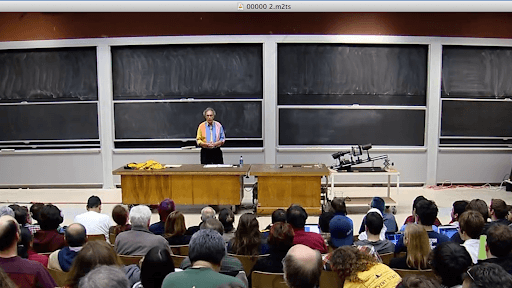
Lectures by Walter Lewin. They will make you ♥ Physics.
A substantial English-language physics lecture archive covering classical mechanics, electromagnetism, and vibrations and waves. The course-oriented...
 Top Pick
FocusMathematics & Physics Open Courseware
Professor Leonard
Course-specific mathematics instruction is organized into playlists designed to support sustained study rather than isolated problem tips. With more...

FocusMathematics & Physics Open Courseware
For the Love of Physics
For the Love of Physics is an English-language physics education channel led by Dibyajyoti Das, who presents formal physics training and university...
 Top Pick
FocusMathematics & Physics
3Blue1Brown
Animated mathematical lessons unpack core ideas across mathematics, physics, and computer science. Visual explanation is the defining format, using...