
Education
MathiBae
Step-by-step lessons cover general mathematics, pre-calculus, engineering mathematics, science, and civil engineering subjects. The teaching emphasis is on explaining concepts alongside worked problems, making MathiBae oriented toward learners who need to follow a method rather than only see an answer. It is a practical fit for students building foundations or reviewing technical coursework at their own pace.
Hidden GemEducation
Editorially reviewed:
Evergreen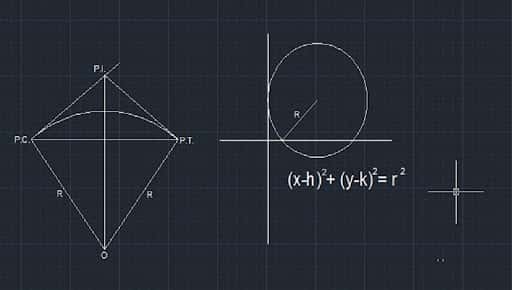

Viewer engagementModerate engagement
Based on 20 recent videos
Assessed 27 September 2026
Editorial focusSTEM Problem Solving Technical Training
Editorial note
WorthWatch verdict
Best for
Students reviewing mathematics and civil engineering coursework
Strength
Method-focused explanations paired with worked technical problems
Consider if
you need a self-paced refresher before attempting similar problems independently
Recent videos
Latest from the source
Deep Dive
MathiBae: Worked Paths Through Mathematics and Engineering
Main focus
MathiBae pairs concept explanations with worked solutions across general mathematics, pre-calculus, engineering mathematics, science, and civil engineering. Its lessons suit learners who want to understand the method behind a result while strengthening course foundations.
Why it matters
Use it to revisit a difficult formula or trace the stages of a technical problem before tackling similar coursework independently. The cross-subject range supports students moving between mathematical fundamentals and engineering-focused study.
Style
Concept-led walkthroughs move from explanation into step-by-step problem solving, keeping attention on the sequence of a method rather than a final answer alone. The approach is suited to self-paced review and classroom reinforcement.
Consistency
Across 69 videos, MathiBae spans foundational mathematics through science and civil engineering, creating an archive for targeted revision across related technical subjects.
- General mathematics foundations
- Pre-calculus concepts
- Worked problem solving
- Engineering mathematics
- Science coursework
- Civil engineering subjects
Editorial note
For civil engineering applications, pair classroom-style problem solving with current codes, project specifications, and qualified professional guidance where design or site decisions are involved.
Related channels
Related active channels
 Top Pick
FocusSTEM Problem Solving Practical Making
Khan Academy
Khan Academy is an English-language nonprofit education channel with a broad curriculum across math, science, humanities, economics, finance, grammar,...
 Top Pick
FocusSTEM Problem Solving Practical Making
Sick Science!
Hands-on science demonstrations teach educators, families, and science enthusiasts through short, visually led experiments and STEM activities. The...
 Top Pick
FocusSTEM Problem Solving Structured Lessons
Math and Science
Step-by-step math and science lessons provide a practical route through example problems and core academic concepts. Its large library of more than...
 Top Pick
FocusSTEM Problem Solving Classroom & K-12 Learning
TabletClass Math
Math instruction spans foundational Algebra and Geometry through Pre-Calculus, alongside GED, HISET, TASC, and homeschooling-oriented lessons. A large...