
Education
NileRed
Chemistry lessons connect scientific theory to practical purpose, presenting the subject as a creative and engaging field rather than a purely abstract one. The editorial approach draws on training in biochemistry and pharmacology alongside experience in organic-lab and graduate-study settings. It suits viewers seeking accessible applied-science education, while any hands-on chemical work should be approached with appropriate safety knowledge and controls.
Top PickEducation
Editorially reviewed:
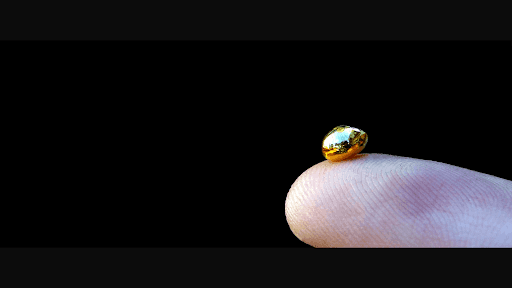

Viewer engagementStrong engagement
Based on 20 recent videos
Assessed 15 September 2026
Editorial focusScience & Technology Practical Making
Editorial note
WorthWatch verdict
Best for
Curious viewers drawn to applied chemistry
Strength
Purpose-led experiments that make chemical theory tangible
Consider if
you want to watch complex demonstrations rather than recreate them
Recent videos
Latest from the source
Deep Dive
NileRed: Chemistry With Purpose and Wonder
Main focus
NileRed treats chemistry as a practical, creative subject, linking underlying theory to a clear reason for each exploration. Its perspective combines biochemistry and pharmacology training with experience in organic-lab and graduate-study settings.
Why it matters
Choose this source when you want chemistry explained through applied questions rather than detached concepts. It reconnects theory with purpose, making the subject more engaging for curious learners and science-minded general audiences.
Style
Each exploration aims to balance explanation with a tangible purpose, using chemistry’s visual and creative potential to hold attention. The tone is accessible and curiosity-led, rather than treating the subject as a set of abstract facts to memorize.
Consistency
Across nearly 400 videos, the body of work follows the same stated aim: making chemistry engaging by connecting theory to use. That through-line gives the archive a clear identity for viewers returning to the subject over time.
- Applied chemistry
- Theory connected to purpose
- Chemistry as a creative subject
- Accessible science education
- Biochemistry and pharmacology perspectives
Editorial note
Chemical demonstrations can involve hazardous materials, fumes, heat, pressure, or toxic exposure; treat them as educational viewing, not unsupervised home instructions.
Related channels
More in Science & Technology and Practical Making
 Top Pick
FocusScience & Technology Practical Making
Animagraffs
3D animated explainers make complex subjects easier to follow through visual models and entertainment-minded teaching. Jake O'Neal frames the work...
 Top Pick
FocusScience & Technology Earth & Space Science
Kurzgesagt – In a Nutshell
Kurzgesagt – In a Nutshell is a highly established educational animation channel focused on science and curiosity-driven explanations. Kurzgesagt – In...
 Top Pick
FocusScience & Technology STEM Problem Solving
Veritasium
Science questions and educational ideas anchor Veritasium’s broad video library, which also makes room for other subjects the team finds interesting....
 Top Pick
FocusScience & Technology Earth & Space Science
Cleo Abram
Huge If True teaches emerging science and technology through polished, optimistic video explainers on innovations that may shape the future. Its...