
Academic Learning
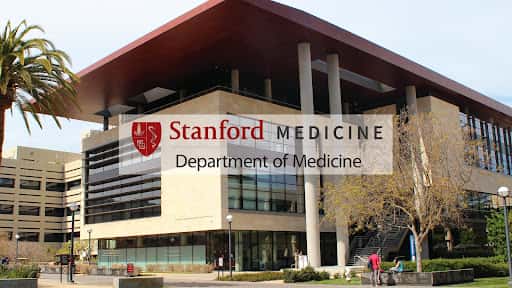
Stanford Department of Medicine
Faculty-led conversations examine medical research, clinical care, public health, and the changing practice of medicine. Recent programming combines long-form discussions on cancer, vaccines, AI, infectious disease, and longevity with concise explainers and patient-facing skills such as hands-only CPR. It is best suited to viewers seeking accessible academic context on current health questions, while keeping personal treatment decisions with qualified clinicians.
Hidden GemAcademic Learning
Editorially reviewed:

Viewer engagementHealthy engagement
Based on 20 recent videos
Assessed 08 October 2026
Editorial focusScience & Research Public Scholarship
Editorial note
WorthWatch verdict
Best for
health-curious learners exploring medicine’s research-to-care pathway
Strength
faculty-led context connecting discovery, clinical practice, and medical education
Consider if
you want broad academic perspectives rather than personal health guidance
Recent videos
Latest from the source
Molecular Surveillance with Julie Parsonnet, MD | Stanford Medicine Grand Rounds
08 October 2026
Turning Genes Into Medicine with Katherine A. High | Stanford Medicine Grand Rounds
08 October 2026
How a Tiny Worm Reveals Big Insights for Medicine | Stanford Med Grand Rounds
08 October 2026
Deep Dive
Stanford Department of Medicine: Research, Education, and Clinical Discovery
Main focus
Stanford Department of Medicine traces the connections between medical research, physician-scientist education, clinical programs, and patient care. Its coverage spans 15 divisions, placing treatment development and institutional work within the wider practice of academic medicine.
Why it matters
Choosing a university-based perspective on health research and clinical care brings learners into the work behind new treatments and medical training. Stanford Department of Medicine offers useful context for anyone interested in how discoveries move through research, education, and care settings.
Style
Faculty-led stories, program features, and research-focused updates frame medicine as a collaborative discipline. The emphasis is broad and institutional, connecting scientific questions with clinical practice, education, and the people working across the department.
Consistency
Work across 15 divisions gives the archive a wide academic-medical range, from research and education to clinical programs and faculty stories. It works best as a resource for exploring connected areas of departmental activity.
- Medical research and discovery
- Clinical programs and patient care
- Physician-scientist education
- Treatment translation
- Faculty and departmental perspectives
- Challenges in human health
Editorial note
Use clinical and treatment discussions for general education rather than personal medical decisions, and discuss symptoms, care options, medications, or treatment changes with a qualified clinician.
Related channels
More in Science & Research and Public Scholarship
 Top Pick
FocusScience & Research Public Scholarship
University of California Television (UCTV)
Health and science research take center stage in a large university television archive designed to inform and educate a general audience. The...
FocusScience & Research Public Scholarship
American Museum of Natural History
Scientific research, exhibitions, and collection-based interpretation guide this museum’s videos across human cultures, the natural world, and the...

FocusScience & Research
EarthquakeSim
EarthquakeSim translates real seismic data into 3D visualizations of how earthquakes can affect buildings and structures around the world. Its...

FocusScience & Research Research Talks
MicrobeTV
University-style virology teaching anchors a broad science library spanning microbiology, parasitism, evolution, immunology, neuroscience, and...