
Education
Trees Atlanta
Urban-forest education anchors the recent programming, with sessions on botany, native plants, green infrastructure, wildlife habitat, and forest restoration. The catalog favors long-form Lunch and Learn talks, speaker-series presentations, and expert Q&As, alongside occasional short conservation pieces. It is most useful to Atlanta-area residents, educators, and gardeners seeking practical context on city trees and local ecology.
Hidden GemEducation
Editorially reviewed:

Viewer engagementHealthy engagement
Based on 20 recent videos
Assessed 20 October 2026
Editorial focusEarth & Space Science Expert Talks
Editorial note
WorthWatch verdict
Best for
Atlanta residents and gardeners exploring urban ecology
Strength
Expert-led local guidance on trees, habitat, and restoration
Consider if
you need advice tailored to climates or regulations beyond Atlanta
Recent videos
Latest from the source
Deep Dive
Trees Atlanta: Urban Forest Stewardship in Action
Main focus
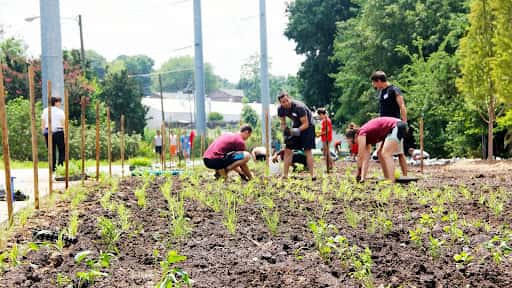
Trees Atlanta connects tree planting, conservation, and public education around the care of Atlanta’s urban forest. Its civic focus makes Trees Atlanta a useful entry point for understanding how healthier tree cover can grow through community stewardship.
Why it matters
Finding ways to participate in Atlanta’s urban canopy becomes more tangible through its blend of conservation learning and community-minded action. Trees Atlanta suits residents, volunteers, and environmental learners seeking an approachable local perspective on city trees.
Style
Community-minded environmental education links practical tree care with the wider purpose of conservation and neighborhood participation. The tone is accessible and civic in spirit, keeping attention on urban nature as a shared local resource.
Consistency
Across 145 videos, Trees Atlanta builds an ongoing educational resource around Atlanta’s trees, conservation work, and public participation.
- Urban tree planting
- Tree conservation
- Community stewardship
- Environmental education
- Atlanta’s urban forest
Editorial note
Tree selection, planting, and maintenance advice may be most relevant to Atlanta’s climate and urban conditions; elsewhere, compare local species suitability, regulations, and site needs.
Related channels
More in Earth & Space Science and Expert Talks
 Top Pick
FocusEarth & Space Science Science & Technology
MinuteEarth
Science and story-led explainers guide viewers through questions about the planet and its systems. MinuteEarth presents a broad educational remit with...
 Top Pick
FocusEarth & Space Science Science & Technology
Astrum
Question-led astronomy explainers examine the scale of the Solar System, the bodies orbiting the Sun, and the significance of space exploration....
 Top Pick
FocusScience & Technology Earth & Space Science
Kurzgesagt – In a Nutshell
Kurzgesagt – In a Nutshell is a highly established educational animation channel focused on science and curiosity-driven explanations. Kurzgesagt – In...
 Top Pick
FocusStructured Lessons Earth & Space Science
CrashCourse
Courses in history, literature, science, and other core subjects are presented as free educational video series. CrashCourse emphasizes a course-based...